


 Topic Options
 Igorevich wrote:
Copyright © 1998
Cadman Enterprises Ltd

Welcome to the Graham Slee Audio Products Owners Forum  Open to all owners plus those contemplating the purchase of a Graham Slee HiFi System Components audio product and wishing to use this forum's loaner program: join here (Rules on posting can be found here) This website along with trade marks Graham Slee and HiFi System Components are owned by Cadman Enterprises Ltd |
What's with the bad rap about Grado cartridges? |
Post Reply 
|
Page <1 789 |
| Author | |
Igorevich 
New Member 
Joined: 09 Aug 2020 Location: Germany Status: Offline Points: 21 |
 Post Options Post Options
 Thanks(0) Thanks(0)
 Quote Reply Quote Reply
 Posted: 17 Sep 2024 at 12:15pm Posted: 17 Sep 2024 at 12:15pm |
|
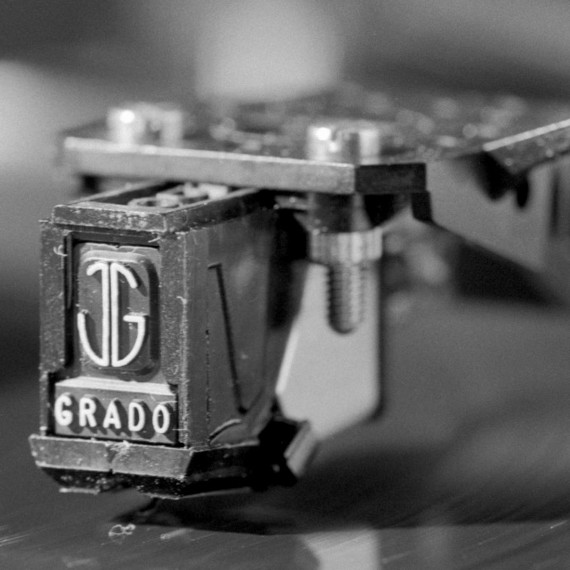
I feel the need to "break a lance" for Grado carts! It is everyone's right to expect sufficient performance without IGD, sibilance and similar issues. And with Prestige series Grado carts one does have to battle with those issues, sometimes. If you can't get rid of those and don't plan on changing your turntable / tonearm, you'll have to sell the Grado. But the difference between those carts in an unfitting environment vs a fitting one, is nothing short of breathtaking. If they don't work for you, don't jump to the conclusion that you now know how they sound, your turntable was just unfitting. There are certainly many other great sounding cartridges around, if a Grado does not fit your turntable. I don't believe there is such thing as "Grado house sound" which is somehow unobtainable with any other technology. Good cartridges are transparent and make the music sound lifelike and I'm sure many different ways can lead to this result. If you hear a "Grado house sound" - you either have one of the cheaper carts and it's compromised, or something is wrong elsewhere. However, the real sound of a Grado Prestige series cartridge WILL come out after the utmost care has been taken during setup. ALL parameters like offset-angle, overhang, VTF, VTA and antiskate have to be dialed in just perfectly. If you experience excessive sibilance and mistracking, you may need to adjust VTA by lowering the tonearm base. Don't try to compensate for tracking issues by increasing VTF without remorse, because the main reason higher VTF helps is by slightly bending the cantilever, thus achieving the same change in positioning from the stylus point of view as adjusting VTA down! I track my Grado at 1,65g, slightly "tail down" and there is no sibialnce or IGD issue in sight, unless of course the record is second hand and obviously worn, but even then it's not a major issue at all. A simple elliptical stylus will never produce such wondrous results in terms of tracking like say, a MicroLine or similar severe profile, no matter the manufacturer. While it is true that "standard" Prestige line series styli look more like a spherical under scope, you can easily purchase an 8mz stylus which, viewed under a scope, turns out to be a real elliptical cut, even if not the sharpest out there. This stylus goes for about the same price as a Gold stylus and brings any of the plastic-body Grados to a whole new level of performance. With a fitting tonearm, highest care taken in setup and an 8mz stylus, a simple Grado Prestige series cartridge will sound pretty close to endgame in all regards. There is little that can challenge it in terms of musicality and expressiveness in the midrange. The bass is deep and tuneful. The soundstage is it's best trait, deep and wide, with a great deal of precision. The only drawback sound-wise - the best-of-the-best cartridges manage just a little bit more air and detail on the very top frequencies, which is noticeable by direct comparison. Once you stop comparing and start listening, this little difference is not noticeable or distracting at all. When listening to my little Grado cart I forget about all the performance checkboxes and the music takes over, acoustic instruments and voices sound very lifelike which has been confirmed by guests who play music instruments themselves. There is no "Grado house sound" to their cartridges or "Grado dance". These are all issues indicative of either a mismatch in terms of tonearm, bad cartridge setup, or maybe someone expecting too much from, say, a Grado Black (which is the cheapest of them all). In regards to the hum issues. The coils on a Grado cart are positioned in a way, where they "look down" towards the record, at about the same angle as the cantilever does. You can easily see what I mean by pulling the stylus out from it's chamber and looking inside. This orientation means they will be very sensitive to picking up signals coming from underneath the platter. Maybe more so, than with other orientations. Shielding the cartridge will inevitably increase it's mass. The compliance of the cartridge as it is, already sits at the higher end of medium with 20cus. The cartridge is already, as it is, picky about tonearms and tends to prefer ones that are light. If weight of the cartridge was to be increased, it's compatibility with modern day tonearms would become even less. So it seems a conscious choice was made: to just expect the turntable manufacturer to shield the motor. Or to position the motor further away from the path of the tonearm over the record. On turntables with well shielded or outboard motors you don't have any hum issues at all. I'm running a Grado cart on a Technics SL-1200Mk2, obviously the motor is right at the center. So in the runout groove, when I listen with headphones and increase the volume beyond what would be reasonable, I can hear hum. It's inaudible during music playback while the stylus rides further away from the center and the volume is set so that I can enjoy music, not feel pain. |
|
|
Audio, ergo sum
|
|
 |
|
|
patientot
Senior Member 
Joined: 28 Nov 2018 Location: USA Status: Offline Points: 1778 |
Post Options
Thanks(0)
Quote Reply
Posted: 17 Sep 2024 at 3:51pm |
No interest in rehashing the performance limitations of Grado cartridges. However, the shielding/mass argument here seems a bit of a reach and not in line with the realities of other cartridge manufacturers. Most of the major manufacturers of high output cartridges today offer shielded cartridges and those cartridges do not carry excessive weight. A typical plastic or plastic and metal bodied cartridge will weigh around 6g and be shielded. Many of these are going to be around the same compliance as a Grado when measured. A Grado Gold weighs 5.5g. If you think 0.5g or so makes a world of difference in tonearm compatibility I have a bridge in Brooklyn to sell you. If Grados are unshielded or poorly shielded it is by intention and has little to do with weight. Their wood bodied carts are often the same compliance as the plastic/metal ones and weigh more, around 9g. |
|
|
SL-1200 MK7 (modified) + Reflex M + PSU-1 used with AT150-40ML, AT VM610 MONO, AT VM95ML, Stanton 680mkII + Ogura, and Shure M35X cartridges.
|
|
|
|
|
Igorevich
New Member
Joined: 09 Aug 2020 Location: Germany Status: Offline Points: 21 |
Post Options
Thanks(0)
Quote Reply
Posted: 17 Sep 2024 at 4:10pm |
|
If the weight of the shielding is irrelevant, something else must have been the reason to not shield the carts. As you say, it is intentional. I was really speculating about what the intention might have been
|
|
|
Audio, ergo sum
|
|
|
|
|
Post Reply
|
Page <1 789 |
 Tweet
Tweet
|
| Forum Jump | Forum Permissions You cannot post new topics in this forum You cannot reply to topics in this forum You cannot delete your posts in this forum You cannot edit your posts in this forum You cannot create polls in this forum You cannot vote in polls in this forum |
Forum Software by Web Wiz Forums® version 12.01
Copyright ©2001-2018 Web Wiz Ltd.
This page was generated in 0.070 seconds.
Copyright ©2001-2018 Web Wiz Ltd.
This page was generated in 0.070 seconds.